Buddhism
Summary
A Buddhist is a person who adheres to the teachings of Siddhartha Gautama (the Buddha), viewing him as an enlightened teacher who discovered the path to liberation from suffering.
There are roughly 300 - 500 million adherents, making it the world's fourth-largest religion, although it may be classified as a philosophy instead depending on how it is practiced. Being a Buddhist can differ significantly between traditions, particularly regarding the nature of the Buddha, the methods of practice, and the specific scriptures held as authoritative.
Membership:
- 300 - 500 million adherents
Starting Date:
- 6th - 5th Century BCE
Popular branches:
-
Mahayana ('Great Vehicle') 53% - 62% of followers
- The largest branch, focused on the altruistic intention to become enlightened for the sake of all beings.
-
Theravada ('School of the Elders') 35% - 38% of followers
- The oldest surviving school, emphasizing the attainment of self-liberation.
-
Vajrayana ('Diamond Vehicle') 6% of followers
- While often categorized under the Mahayana umbrella, it remains a distinct tradition characterized by tantric and esoteric practices aimed at rapid enlightenment.
Primary Foundational Texts:
-
Theravada Authority: The Pali Canon (Tipitaka)
-
Primary Texts: Vinaya Piṭaka (Discipline/Rules), Sutta Piṭaka (Discourses/Sayings), and Abhidhamma Piṭaka (Philosophy).
-
Description: The complete "Triple Basket" preserved in the Pali language, and the oldest surviving texts of Buddhism.
-
Authority: For Theravada, this is the sole and final authority. They generally view later texts as non-canonical or unverified.
-
-
The Mahayana Authority: The Mahayana Sutras
-
Primary Texts: The Lotus Sutra, Heart Sutra, Diamond Sutra, Avataṃsaka Sutra, Lankavatara Sutra, Pure Land Sutras, etc.
-
Description: These texts emerged later in written form and record the "Bodhisattva Path", the goal of staying in the cycle of rebirth for the sake of all beings.
-
Authority: For Mahayana, these are often regarded as the highest authority. They view the earlier Pali texts as "elementary" or "foundational" teachings.
-
-
The Vajrayana Authority: The Tantras (Broad Vajrayana) and The Tibetan Canon (Tibetan Buddhism - A form of Vajrayana)
-
Primary Texts: The Tantras (vast collection(s) used in various schools of Vajrayana) and The Kangyur and Tengyur (used in Tibetan Buddhism).
-
Description: These focus on "esoteric" practices using ritual, visualization, and mudras to achieve enlightenment in a single lifetime.
-
Authority: For Vajrayana, the Tantras are the definitive authority. They accept all the layers below (Early Discourses + Mahayana Sutras) but view Tantra as the "secret" or most effective "Diamond" path.
-
Early Founders:
-
Siddhartha Gautama (The Buddha)
-
Ānanda (Attendant of the Buddha)
-
Mahāprajāpatī Gautamī (First ordained Woman)
Popular Verses
"Mind precedes all mental states. Mind is their chief; they are all mind-made. If with an impure mind a person speaks or acts, suffering follows him like the wheel that follows the foot of the ox." ~ Dhammapada 1:1
"Om mani padme hum" ~ Kāraṇḍavyūha Sūtra
Early History
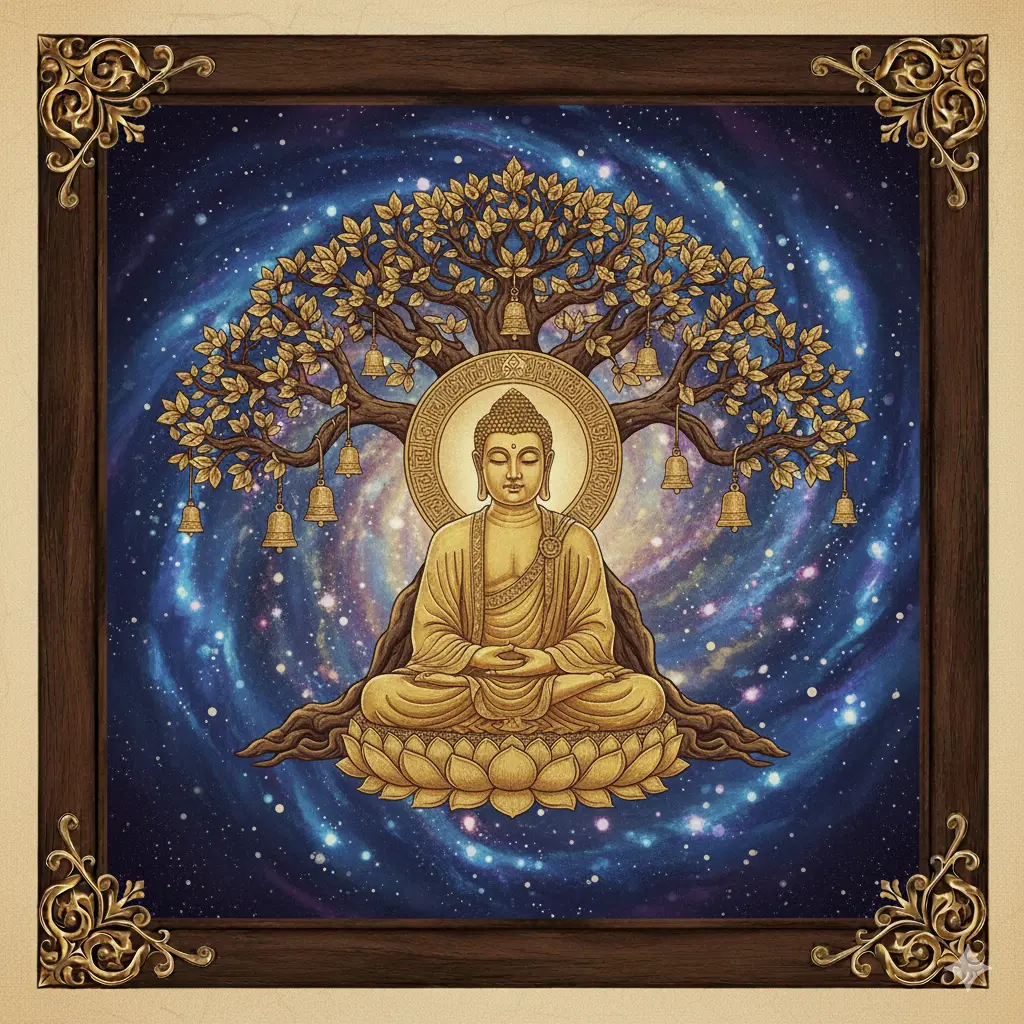
Buddhism developed from the teachings of Siddhartha Gautama (the Buddha) in the region of ancient India and Nepal. The precise dates of his life are debated, but generally place his death between 483 and 400 BCE. Siddhartha was said to be a former prince who renounced his royal life to find the end of suffering, eventually attaining Enlightenment (Bodhi) in meditation under a Bodhi tree. He spent the next 45 years teaching his doctrines, including the "Middle Way", a path between extreme asceticism and sensual indulgence.
The movement initially consisted of a small group of monastic followers (the Sangha) who wandered with the Buddha, and lay supporters who provided them with food and robes. The Buddha gained the patronage of kings like Bimbisara and Pasenadi, allowing the Sangha (assembly) to grow rapidly, gathering several thousand followers. After the Buddha's death, his teachings were preserved orally, until eventually being written down in the 1st century BCE.
Differing interpretations over monastic rules and the nature of an Arhat (enlightened being) eventually led to the first major schism roughly a century later. This split the community into the Sthavira Nikāya (Elders) and the Mahāsāṃghika (Great Assembly), forming different opinions on several matters, particularly with rules to be obeyed.
During the 3rd century BCE, under the patronage of Emperor Ashoka of the Mauryan Empire, Buddhism transformed from a regional Ganges sect into a trans-regional religion. Ashoka is heavily credited with spreading Buddhism by supporting missionaries, providing donations, constructing pillars inscribed with moral principles, and building numerous Buddhist Stupas (shrines). Following this expansion, doctrinal interpretations continued to diverge. Around the 1st century BCE the Mahayana movement emerged as a distinct movement, with expanded canonical scriptures that presented the Bodhisattva path (attaining enlightenment for the benefit of all beings).
Work in Progress - To Be Continued